
For the first time in Azerbaijan - scientific research on "Publishing, distribution and criticism of the works of the world-famous writer Dan Brown"
Dan Brown was born on June 22, 1964, in New Hampshire (USA) to a mathematics professor, Richard Brown, and a musician, Constance Brown. Brown graduated from Phillips Academy in Exeter, where his father taught mathematics until his retirement in 1982. Brown's parents were musicians, and his mother also served as an organist at the church. The family belonged to the Episcopal Church of the United States. After graduation, Brown enrolled at Amherst College, where he became an active member of the Psi Upsilon fraternity. He graduated in 1986 and spent his final year studying art history at the University of Seville in Spain. After completing his college education, Dan Brown attempted to start a career as a songwriter, musician, and performer. Brown released several compact discs (CDs) with his recordings. In 1991, he moved to Hollywood, where he began teaching at Beverly Hills Preparatory School. In 1993, Dan Brown and his family returned to New Hampshire, where he started teaching English at Phillips Academy in Exeter and Spanish at Lincoln Akerman School. Currently, Dan Brown also engages in journalism, regularly participating in the life of magazines such as Newsweek, Time, Forbes, People, GQ, and The New Yorker, as well as various famous radio and television programs.
Dan Brown’s wife, Blythe Brown, who is an art historian and painter, helped him with his research and accompanied him on travels and academic trips. In 1995, the couple's collaborative effort resulted in the bestselling book “187 Men to Avoid: A Survival Guide for the Romantically Frustrated Woman.”
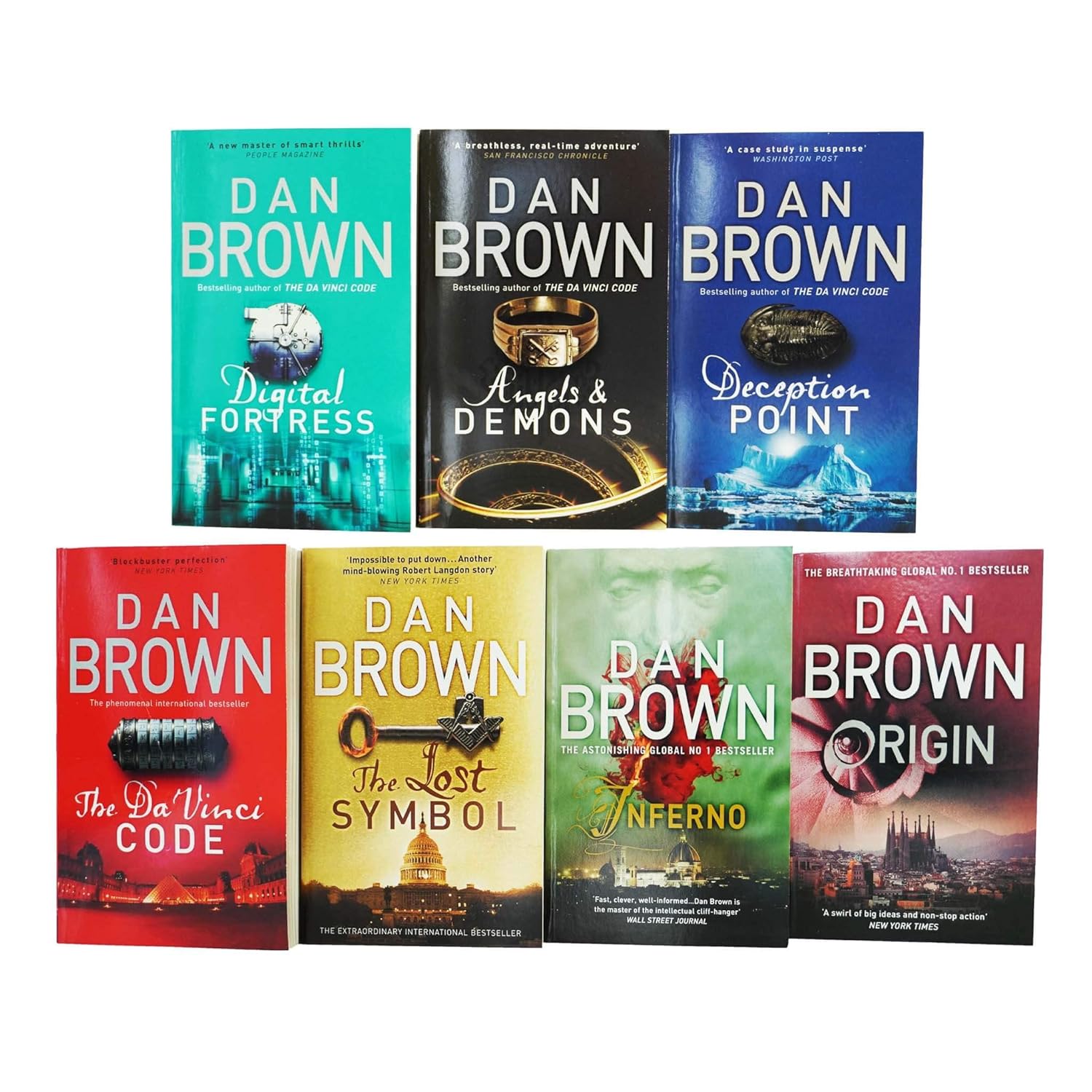
In 1998, after a long-standing interest in philosophy, religions, cryptography, and the history of secret societies, Brown published his first bestseller novel, "Digital Fortress." The novel explores the thin line between civil liberties and national security and provides information about the secret operations of the National Security Agency. Immediately after its release, Dan Brown's novel climbed to the top of electronic book rankings.
Growing up in an environment dominated by sometimes opposing philosophies such as science and religion, Dan Brown, the son of an award-winning mathematics professor and a church musician, was influenced by these complementary ideas, leading to the writing of his famous novel "Angels & Demons." This work explores the themes of science and religion through events occurring between a Swiss physics laboratory and the Vatican. Brown’s third novel, "Deception Point," delves into topics such as political ethics, security, and secret technologies.
In 2003, Dan Brown published "The Da Vinci Code," a novel continuing the adventures of Professor Langdon, the protagonist of Brown's other works besides "Digital Fortress" and "Deception Point." In September 2009, "The Lost Symbol," a novel revealing the hidden past of America's Masonic history and the third book about Robert Langdon, was published. In May 2013, the fourth installment of this series, "Inferno," was released. On September 28, 2016, Sonny Mehta, chairman and editor-in-chief of the Knopf Doubleday Publishing Group, announced the publication of another Robert Langdon novel, "Origin," planned for release on September 26, 2017. The novel was indeed published, albeit slightly later, on November 3, 2017, marking Dan Brown's seventh novel and the sixth one featuring Professor Robert Langdon.
Dan Brown's first novel, "Digital Fortress," as previously mentioned, was published in 1998 by St. Martin’s Press and Transworld (UK). The detective novel was translated into Azerbaijani by Yashar Asadov. The 544-page novel was published in Azerbaijan in 2012 with a print run of 1000 copies by Qanun Publishing House. The book was also published in Turkey by Altın Kitaplar Publishing House, translated into Turkish by Sezer Soner, prepared for publication by Muharrem Nesil Huvaj, and with a cover design by Emrullah ÖZ. The plot revolves around a dangerous virus infiltrating the National Security Agency's database. Initially, no one takes it seriously, as the data bank of this superpower, containing all secret information, is protected by multiple layers of cyber defense. However, within hours, it becomes clear that the NSA's most secret and fastest code-breaking computer is powerless against the new virus, "Digital Fortress." The virus begins to break down the defense programs of the NSA’s data bank. If the defense layers are completely destroyed, millions of people will gain access to the country’s closely guarded state secrets, which would be catastrophic. To neutralize this devastating virus, renowned cryptographer Susan Fletcher is brought in. Meanwhile, a search for the programmer who created the virus begins. Surprisingly, the culprit is inside the NSA itself. The novel features a fictional theorem, "Bergofsky's Principle," which posits that every code can be broken by brute force; finding the key is merely a matter of time.
The author's next novel, "Angels and Demons," was published in the USA in 2000. In Azerbaijan, the 728-page novel was published in 2015 by Qanun Publishing House with a print run of 1,000 copies. The book's editor was Ceyran Abbasova, and the translator was Yashar Asadov. In Turkey, the novel was published by Altın Kitaplar Publishing House, with the Turkish version consisting of 575 pages, translated by Petek Demir. "This novel is the first to feature Professor Robert Langdon." "Illuminati." An ancient secret brotherhood made famous by its fierce and angry battle with the official church in the Middle Ages. Is it just a legend from the distant past? Perhaps... But why then is the body of a scientist, who was on the verge of scientifically proving the existence of God, branded with the Illuminati's symbols? A symbol specialist from Harvard and the murdered scientist's daughter begin their investigation and soon achieve incredible results... At the request of readers, a page was placed on CERN's (European Organization for Nuclear Research - the world's largest high-energy physics laboratory) website showing that the physics aspects of the plot in the novel are fictional. It stated that the antimatter bomb described in the novel is impossible, as antimatter is not created as depicted. With existing accelerators, it would take billions of years to create just one gram of antimatter. Using it as an energy source is highly inefficient. The energy released by the destruction of all the antimatter obtained at CERN would be enough to power an ordinary light bulb for only a few minutes. CERN employee Rolf Landua mentioned in an interview with the Italian magazine "Newton" that producing one gram of antimatter would cost 1,000 trillion dollars. For comparison, the annual budget of the USA would be enough to create only a few micrograms of antimatter. At the beginning of the 21st century, this book did not have much demand. Only after the publication of "The Da Vinci Code" did this novel also become a bestseller. In 2004, it became one of the best-selling books according to "Publishers Weekly." In May 2009, Ron Howard directed a big-budget film adaptation of the book, with Tom Hanks playing the role of Langdon. The plot of the book and the film do not entirely coincide.
The author's third novel, "Deception Point," was published in the USA in 2001 and in Turkey by Altın Kitaplar Publishing House and in Russia by AST Publishing House in 2005. It should be noted that in Russia, this novel was also published by "Tranzitkniga" Publishing House. In Azerbaijan, the 616-page book was published in 2012 with a print run of 1,000 copies by Qanun Publishing House. The publishing house reprinted the book in 2013 and again in 2017. The Azerbaijani translation was done by Yashar Asadov, with editing by Mehman Mammadov and proofreading by Fakhraddin Agazade. In the Arctic, a rare artifact capable of changing the future of humanity is discovered. A scientific expedition is sent to determine the authenticity of the unusual find. However, as soon as the expedition members reach the site, they start dying one after another. Who is killing them and why? Perhaps they have come too close to uncovering the artifact's secret?
The author's next novel, "The Da Vinci Code," a detective thriller, was published by Doubleday Group in April 2003. In Azerbaijan, the 520-page novel was published in 2012 with a print run of 1,000 copies by Qanun Publishing House. The Azerbaijani translation was done by Samir Bulut. In Russia, the novel was published by AST Publishing House. In Turkey, the novel was first published in 2003 (528 pages) by Altın Kitaplar Publishing House. Qanun Publishing House also released a version of this novel intended for teenagers under the title "The Da Vinci Code," consisting of 432 pages. This version was translated into Azerbaijani by Sevil Gulten. The book became an international bestseller: it has been translated into 44 languages and sold over 81 million copies worldwide. "The Da Vinci Code" topped the New York Times bestseller list and was included in the "Publishers Weekly" bestseller list for 2003, 2004, and 2005, with many considering it the best book of the last decade. Written in the genre of a scientific detective thriller, this novel sparked great interest in the legend of the Holy Grail and the role of Mary Magdalene in Christianity. The story begins with a late-night phone call informing the main character, Robert Langdon, of the murder of an elderly guard at the Louvre Museum. Initially, Langdon is suspected of the murder because the guard, Jacques Saunière, was supposed to meet him that night. Saunière’s granddaughter, Sophie, helps Langdon escape from the police. They discover intriguing information about Saunière. It turns out that he was a member of a secret society called the Priory of Sion, which had taken over the Christian secret documents from the Templars, protecting the Holy Grail – the Sangreal. Their search for the Holy Grail intersects with the interests of others, including the Opus Dei organization. Throughout the novel, the protagonists encounter fascinating revelations and eventually find the Holy Grail. The idea for the book was inspired by "Holy Blood, Holy Grail," a 1982 book by Michael Baigent, Richard Leigh, and Henry Lincoln. Baigent and Leigh sued Brown, claiming "The Da Vinci Code" was not an independent work but a fictional version of their writings. However, in 2006, the court ruled in favor of Brown. Dan Brown did not deny being familiar with "Holy Blood, Holy Grail" (explicitly mentioned in chapter 60) but listed "The Woman with the Alabaster Jar" by Margaret Starbird and "The Goddess in the Gospels: Reclaiming the Sacred Feminine" by Margaret Starbird, as well as "The Templar Revelation" by Lynn Picknett and Clive Prince as key sources for his novel. "Holy Blood, Holy Grail" was itself based on the research and hypotheses of amateur German archaeologist Otto Rahn in his 1933 book "Crusade Against the Grail" and the false documents collection "The Secret Dossiers" by Henri Lobineau. Hermitage senior scientist Mikhail Anikin also expressed dissatisfaction, stating that part of the idea was taken from his 2000 book "Leonardo da Vinci or Theology in Color." After the release of "The Da Vinci Code" in 2003, the novel and Brown's other three books earned the author over $260 million by 2006. In May 2006, a big-budget film adaptation of the novel was released. However, the book was not universally welcomed. For example, it was banned in Lebanon for allegedly denigrating Christianity. Dan Brown revealed in several programs that his grandfather was also a Mason, finding strange aprons and white gloves in their house. This is thought to be the inspiration for his novel "The Lost Symbol," which revolves around Freemasonry. The book was released in 2009 in both print and electronic formats with an initial print run of 6.5 million copies. On August 17, 2009, Dan Brown ranked third among the best-selling American authors. The novel was published in the USA by Doubleday and in the UK by Transworld in 2009. In Russia, AST Publishing House published the book, translated into Russian by Yashar Asadov. In Azerbaijan, the book was published by Qanun Publishing House in 2013 and 2016 with an initial print run of 1,200 copies, edited by Ilgar Fehmli and proofread by Tünzalə Khalilqızı. This novel references Dan Brown's other novel, "Digital Fortress," and continues the adventures of Robert Langdon. This time, he must uncover the great secret of the Masons that could change the world. Secrets hidden for centuries, mysterious symbols, and dangerous journeys through the labyrinths of the past await.
The author's subsequent work, "Inferno," is a mystical thriller novel written in 2013. It is the fourth book in the series about Robert Langdon, following "Angels and Demons," "The Da Vinci Code," and "The Lost Symbol." The book was first published on May 14, 2013, by Doubleday. After its release, the novel topped the New York Times Best Seller list for the first eleven weeks and also led the e-book list for the first seventeen weeks. The Azerbaijani translation of the novel was done by Əfsanə Nurəli Həmzəyeva, and it was published by Qanun Publishing House in 2014, consisting of 576 pages and a print run of 1,000 copies. In Turkey, the book was published by Altın Kitaplar Publishing House.
"Seek, and ye shall find"
Harvard’s renowned symbologist, Robert Langdon, awakens in a hospital with these words ringing in his ears. He has no memory of where he is or how he got there. He also has no idea how a strange object ended up among his belongings. Threatened with death, Langdon, along with young doctor Sienna Brooks, is subjected to dangerous pursuits throughout the city of Florence. Only Langdon's knowledge of hidden passages in history and ancient secrets can save them from unknown pursuers. Clues from Dante's mysterious and magnificent masterpiece, "The Divine Comedy," guide them to unravel a chain of codes hidden in famous Renaissance monuments, paintings, and buildings. The answers to this puzzle might save the world from a terrible danger. Drawing from one of the greatest works of world classic literature, "Inferno" is considered Dan Brown's most perfect novel. Its unique content will captivate you from the first page until the last. In 2016, "Inferno" was also adapted into a film.
The author’s latest novel is "Origin." It was published in Azerbaijan in 2018 by Qanun Publishing House with a print run of 1,000 copies (528 pages). The Azerbaijani translation was done by Rəfiqə Məmmədova and Xalid Kazımlı. Harvard professor of symbology and religious iconography, Robert Langdon, arrives at the Guggenheim Museum in Bilbao to learn about a discovery that will "change the face of science forever." Hosting the event is his friend and former student, Edmond Kirsch, known for his dazzling inventions and precise predictions that have sparked global debates. This evening is no exception: Kirsch claims he will reveal an astonishing scientific discovery that will stir great debates about the foundations of human existence. However, before Kirsch can unveil his precious discovery at the meticulously organized event, a shocking turn of events occurs. With his life in danger, Langdon, along with museum director Ambra Vidal, embarks on a desperate quest. Together, they flee to Barcelona to uncover the secret password that will unlock Kirsch's mystery. To evade a ruthless enemy who is always one step ahead, Langdon and Vidal must navigate the labyrinth of hidden history and ancient religion. They discover clues marked by obscure symbols and challenging contemporary art that reveal an unspoken truth.
Dan Brown's literary style has been heavily criticized by several literary critics. British poet and editor Tom Chivers likened Brown's prose to lead, suggesting it was so dense it could be used to roof churches. Further waves of criticism arose from Brown's statements in the prefaces of his books claiming that his works were based on historical facts. In September 2009, Brown responded to the criticism, saying: "I am doing something very specific and definitive in these books. I blend fact and fiction in a very modern and effective way to tell a story. Some people understand what I am doing and ride along for the enjoyment. Others, probably, should read another author." Tom Chivers also pointed out in "The Da Vinci Code" prologue that Brown stated all descriptions of artwork, architecture, documents, and secret rituals in the novel were accurate. For example, Chivers noted that the Priory of Sion was not a secret order founded in the 11th century but rather a hoax created by Frenchman Pierre Plantard in 1956. Such discrepancies between real facts and the narrative are also observed in Brown's other works. For instance, "Angels and Demons" claims that Copernicus was burned by the Roman Catholic Church, but in reality, Copernicus lived a long life and died of a stroke in old age (1473-1543, at the age of 70). Similarly, the novel incorrectly states that Galileo was a member of the "Illuminati," a group that was founded over a hundred years after his death.
To reiterate, Dan Brown's novels have only been published in Azerbaijan by Qanun Publishing House. As a reader, I applaud this. It is more appropriate for a single publisher to undertake this task rather than having various publishers release different translations without coordination. I would also like to comment on the quality of these translations. Some may argue that reading Dan Brown's books in their original language or in Russian provides a deeper appreciation of the content. It is true that reading works in their original language offers a unique experience. However, it is also important to recognize that the translator must not only be proficient in both languages but also understand the genre and style of the work. It is known that the genre of Dan Brown's works is relatively new to Azerbaijani literature. Although there have been Azerbaijani writers of detective, scientific, and political works, there have been few who combine thriller, detective, science fiction, and semi-documentary genres in one piece. Thus, before expressing dissatisfaction with the translations of Dan Brown's works into Azerbaijani, it is important to consider these aspects.
"How can you perfectly translate a work into a language that has produced magnificent works influenced by Eastern culture and tradition when the style of the work is inherently different?"
Ədəbiyyat siyahısı
a)Reference list
1. Braun D. Cəhənnəm. –Bakı: Qanun, 2014. -576 s.
2. Braun D. Da Vinçi şifrəsi. –Bakı: Qanun, 2012. -520 s.
3. Braun D. İtirilmiş simvol. –Bakı: Qanun, 2016. -652 s.
4. Braun D. Mələklər və iblislər. –Bakı: Qanun, 2015. -728 s.
5. Braun D. Rəqəmsal qala. –Bakı: Qanun, 544 s.
6. Braun D. Yalan nöqtəsi. –Bakı: Qanun, 616 s.
b)in Russian
7.Бачинин В. А. Бульварное религиоведение Дэна
Брауна // Религиоведение. — 2007. — No 4. — С. 152—156
c) Internet resources
8. https://tr.wikipedia.org/wiki/Dan_Brown
9. http://christsocio.info/content/view/636/
10. https://www.livelib.ru/author/27065-den-braun
11. http://www.peoples.ru/art/literature/prose/detectiv/brown/
12. https://24smi.org/celebrity/4227-den-braun.html
Recent Posts


Artificial Intelligence: The Technology of the Fut...
22.10.2024 23:17
